News
Global clean energy investments for 2011 and 2012 barely flat: Bloomberg New Energy Finance
Global clean energy investments for 2011 and 2012 barely flat: Bloomberg New Energy Finance
Global investment in low-carbon energy could just probably go up to $270 billion at most this year from a record $243 billion in 2010.
What Google and Stanford can teach Asia about electricity management
Smart meters that show consumers’ energy consumption won’t be enough to reduce use, studies show.
Malaysia admits neglecting renewable energy in the last five years
Dismal interest in renewable energy resulted in only 18% of its 350MW installed capacity target achieved for 2005-2010, says the Malaysian government.
Australia CO2 scheme must be scrapped, opposition says
Australia's main opposition party vowed on Monday to repeal a carbon pricing scheme expected to become law next month as a key plank for polls due by 2013, threatening to prolong uncertainty in energy investments. "We will absolutely deliver on our mandate. So the first thing we'll do is we'll seek a mandate for repeal," Greg Hunt, opposition climate change minister, said in an interview. Labor Party Prime Minister Julia Gillard, who lags the opposition Liberal Party in opinion polls, has staked her minority government's future on sweeping economic reform such as taxes on mining and carbon. But voters have been concerned over industry fears the plan to tax carbon emissions will lead to higher costs and job losses, prompting Liberal Party leader Tony Abbott to announce a "blood oath" to repeal the scheme should his party and partners win the next election. The government on Monday labeled the repeal pledge absurd, underscoring the divisive nature of plans to fight climate change by pricing carbon emissions in Australia, the United States and elsewhere. "Of all the blatantly absurd claims we have heard from Abbott in recent months, this 'blood oath' on carbon pricing is the least credible and the most hysterical," Climate Change Minister Greg Combet wrote in a commentary in The Australian newspaper on Monday. "The investment community knows that if Abbott's threat were ever realized it would increase sovereign risk. Consequently, Australia would suffer as an investment destination." The program will impose a carbon tax on around 500 of the country's biggest polluters from July 2012, before moving to a carbon trade scheme in 2015. It also includes more than A$13 billion in support for green energy investments, compensation for households against higher prices and firms that export goods to countries without carbon costs. The Senate began discussing the package of bills on Monday. A vote is expected by late next week and the government, backed by the Greens, has a majority in the Senate. PROFOUND CONCERN Hunt said the opposition would fight on with their own scheme, despite failing to scuttle the government's program. "I deal with Australian business each day and there is a huge body of deep profound concern about the impact of the tax, particularly since it is an electricity tax," Hunt said in a telephone interview from Canberra. "It's not difficult to repeal. All that happens is that people stop paying the tax." The opposition backs a scheme that rewards polluters for low-cost steps to cut emissions from business-as-usual levels but the government and some policy analysts say a national cost on carbon is needed to drive change in investment. Combet labeled the opposition policy a fantasy but the ongoing bickering and uncertainty could delay investment decisions needed to achieve a 5 percent cut in emissions by 2020 from 2000 levels. "Everyone is just keeping their options open while all this political uncertainty plays outs," said Tony Wood, leader of the energy program at the Grattan Institute in Melbourne, an independent think tank. He said a stable outlook for carbon prices could trigger investment in high-efficiency gas power plants. "In the absence of that, other things happen, which are almost certainly either higher costs or more of a threat to security to supply and I think it most likely to be a threat to cost," he told Reuters. Reuters
Kansai faces most severe winter power shortage -Nikkei
Kansai Electric Power Co is facing the most severe power shortage this winter among the nine Japanese utilities that operate nuclear plants, as opposition to restarting idled reactors limits its power generation, the Nikkei business daily said on Monday. The government's National Policy unit is expected to compile utilities' winter power supply/demand outlook as early as Tuesday, projecting a 9.5 percent power shortage in areas served by Kansai Electric in February, the report said. A July estimate by the central government showed Kansai would have an 8.4 percent shortfall this winter. Kansai, which has the highest reliance on nuclear power among Japan's power providers, has yet to announce its winter supply/demand outlook because of uncertainty over reactor restarts. The government is expected to ask Kansai's customers to curb power use by around 10 percent this winter, compared with cuts of 15 percent sought in the summer. Kansai has only four of its 11 reactors running, with three of them set to be closed for maintenance by the year-end, which would limit its ability to genera Reuters
Malaysia is left with no option but push nuclear power
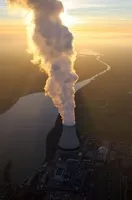
Yes they have more hydro projects on stream but there’s no way that hydro power will catapult the demand for more gas and coal, says the Malaysian government. “We predominantly rely 46% in gas,44% in coal and remaining in hydro and other renewable shares are bit of pieces. When we look at our own refinement, our use of gas and energy is depleting as a way of our demand, very soon we will now see our demand outstripping supply,” Dato’ Sri idris Jala, minister in Prime Minister’s Office and chief executive officer of PEMANDU said during the Singapore International Energy Week.
ADB extends $36.8M loan for Pakistan wind farm

ADB is providing a $36.8m loan to increase the capacity of a wind farm in Sindh, Pakistan.
Energy Secretary rules out electricity subsidy in the Philippines
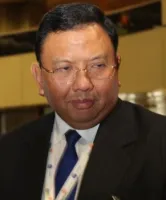
It’s not really about subsidy, but financial assistance to the marginalized sector, says Philippine Energy Secretary Jose Almendras.
Halving CO2 emission by 2050 now hardly possible:Tanaka

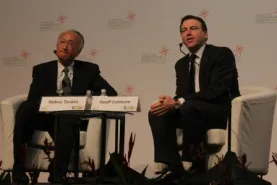
The world aims for 50% reduction in CO2 by 2050 but after the Fukushima disaster, the goal seems difficult to achieve already, said Former IEA director Nobuo Tanaka during the Singapore International Energy Week.
Japan may shut down all nuclear power plants by 2012
Shocking news as no power plants being restarted after maintenance will see Japan off all Nuclear by June 2011.
China's dam plans don't hold water with panelists
China's dam-building ambitions and alleged lack of transparency were front and centre yesterday during a roundtable discussion on Mekong River development held in the capital. Representatives from the Chinese embassy defended their country's record, claiming that China was "eager to participate" in regional cooperation mechanisms. "We aren�t dominating this river," embassy representative Xu Daizhu said. "We want to cooperate with other countries in this region, and we want to cooperate with each other to use the water resources in this region." However, panelists accused the Asian power of irresponsible development. "Chinese dams cause unprecedented social and environmental problems, causing damage to agriculture, fishery forests and ways of life," said fellow panelist Pou Sothirak, former minister of industry, mines and energy. China is now the top builder of dams in Cambodia, Ame Trandem, Southeast Asia Program Director for International Rivers, said yesterday. Currently, five large Chinese dams have been approved in the Kingdom and another four are under consideration, Trandem said, adding that four dams constructed on the Mekong in Chinas Yunnan province were undertaken without consulting China�s neighbours. During yesterday's discussion, China�s transparency also came under assault. "The Chinese government in the past has been keeping all the information on the dams confidential," Pou Sothirak said. "If your government would be so kind as to join the Mekong River Commission, that would be a big gift, because joining means you need to release everything openly." Trandem supported allegations of a lack of transparency, saying that, "to date, China has failed to meet international standards of accountability, transparency and public participation." However, Xu Daizhu upheld China's commitment to regional cooperation. "China is willing to listen, we aren�t closing our doors and doing our own thing," she said. "That�s why I am here and learning about your concerns."
Toshiba to serve as EPC contractor for Japan’s largest solar plant
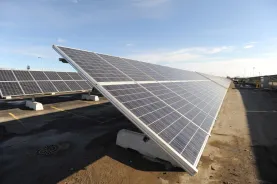
Toshiba Corp will join a seven-company consortium, led by Mitsui Chemicals, to construct and operate Japan's largest solar photovoltaic plant in Aichi Prefecture, Japan.
Japan says ‘goodbye’ to atomic power policy

The energy white paper calls for a reduction in the nation’s reliance on atomic power.
Russian equipment for Kudankulam nuke plant found faulty
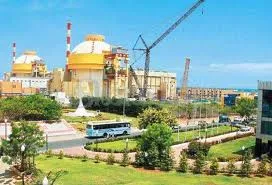
Some of the Russian supplied machineries meant for Kudankulam were found damaged even before their installation, according to a top nuclear engineer.
Coal stock for 30 Indian thermal power plants enough for just four days
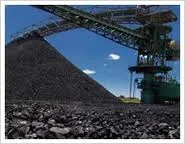
Coal stocks at India’s thermal power plants are critically low on the eve of Diwali, and will not improve unless coal supplies are stepped up significantly, a senior power ministry official said. However, coal-sector authorities said dispatches to power plants had increased. Coal Minister Sriprakash Jaiswal has directed coal companies to give top priority to power plants compared to other customers, but power stations are running with very thin stocks and supplies are not enough to build stocks to a comfortable level. “The critical stock with power projects is a matter of great concern. The coal supply is sufficient for hand-to-mouth existence. There is no coal on railway sidings. Stock would not improve unless we get at least 30-40 additional rakes everyday. The silver lining, however, is that we are receiving 100 per cent coal supply now and projects are operating at full capacities,” a senior power ministry official said. Many plants, including units run by leading energy companies such as NTPC, Reliance Power, Sterlite and Damodar Valley Corp had coal stocks for less than seven days, a condition that the Central Electricity Authority says is “critical”. Latest CEA data shows that number power projects with critically low stocks of coal increased to 48 on Monday from 44 two weeks ago. Thirty plants had “supercritical” stock that would last less than four days. There are 89 coal based electricity generation stations in India that have a capacity of 86,000 mw. NTPC’s Singrauli, Mejia, Vindyachal and Damodar Valley’s Kodarma projects and few other projects with about 9,000-mw had no coal stock as against a normative requirement of 15-20 days. On an average coal plants have stocks for barely seven days. The power ministry official said coal stocks would continue to deplete unless about 190 rakes are dispatched to power sector alone. The coal ministry said a total 147 rakes were dispatched to power projects on Monday. In addition seven rakes and another 1,77,000 tonnes of coal was dispatched through exclusive transportation ties ups. A coal ministry statement said a total of 181 coal rakes were dispatched to all consumers including power plants on Monday. “The coal companies have been advised to ensure priority movement of coal to the power stations of the country and their coal availability is improving,” a coal ministry statement said. The overall average rail loading from Coal India Ltd was 156 rakes per day, of which 127 were dispatched to power stations. During the last three days, 146 rakes have been dispatched to the power stations in northern India. Heavy floods, strikes at mines and the Telangana agitation has crippled mining and loading operations in several states had depleted coal stock at power plants in the beginning of this month.
Hydropower increases India-Nepal trade
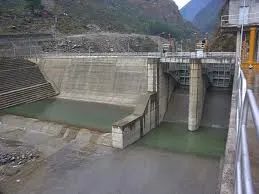
Hydropower helped push bilateral trade between India and Nepal bilateral up to 38% from US$ 1985 million in 2009-10 to US$ 2700 in 2010-11.
Thought Leadership Centre



Resource Center

 Read Here
 Advertise
 Sign Up
Event News

Early bird rates and bundled discounts are currently available.