India
APL aims at tying up all loose ends for 660 MW Mundra TPP unit by January 2012
APL aims at tying up all loose ends for 660 MW Mundra TPP unit by January 2012
Struggling to regain its grip on the critical activities of its 600 MW unit of the Mundra thermal power plant (TPP), Adani Power Limited (APL) has made a contingency arrangement for structural erection works associated with the coal handling plant, hoping that the process is completed before the revised estimate of December 2011. With the grim reality of unstable progress weighing down on APL, it has now resorted to expediting the civil and structural fabrication works. Further, it has also started maintaining the ash handling plant, which has been reported as ‘critical’ recently. In all likelihood, the works of the plant, along with the commencement of full load operations, will now be completed by the end of January 2012. In addition to this, the feasibility of unit commissioning is also dependent upon the boiler light up (BLU) and turbine generator (TG) box up works, both of which have now been pushed ahead by a period of six months. The oil synchronization process is now scheduled to be completed by mid December this year. APL has been struggling with the coal firing process, with this crucial activity now anticipated to be completed by end of December 2011.
Lanco's Saibaba foresees India solar costs cheapening by 40%

India's solar power costs could fall by more than 40 percent by 2015, said Lanco Solar CEO V. Saibaba. Solar technology in India could provide a kilowatt hour of power at about 7 to 8 rupees a unit in the next few years, down from the current 11 to 12 rupees, due to surging global capacity, he explained. This will allow the industry to compete against domestic oil and gas firms without the help of state subsidies. It would also enable solar power to become a more viable option to coal, which costs around 2 rupees a unit, in fueling Asia's third largest economy and the world's third-worst carbon polluter. "The most important thing is the economics of scale are coming," Saibaba said on the sidelines of an industry conference. "In the next three to four years, I see the solar power costs coming down to 7 to 8 rupees a unit." Under its Solar Mission plan issued in 2009, India is to produce 1,300 megawatts of power by 2013 and 20 gigawatts by 2022 at an overall investment of about $70 billion. Lanco Solar is one of 37 companies selected by India last year to build solar power projects, as the country looks to boost production from near zero. "Given the current scenario with the way it is growing and the way costs are coming down, our industry will probably not require any financial support from the state going forward in maybe three to four years," Saibaba said.
NTPC bags Rs 43 crore contract in Bangladesh
NTPC Consultancy, a part of the state-run power major, has secured a six-year contract to provide operations & maintenance services at the Siddhirganj Peaking Power Plant in Bangladesh.
Maheshwar hydropower developer defaults on loan payment
With a massive financial burden weighing down heavily on Shree Maheshwar Hydel Power Corporation Limited (SMHPCL), the developer of the 400 MW Maheshwar hydro electric project (HEP) in Madhya Pradesh, the company is now trying to maneuver its way out of the chaotic state of affairs by securing infusion of equity from a potential investor or financier.Having defaulted on re-payment of the subordinate loan, which was due by mid October 2011, worth Rs 375 crore extended by its prime lender, Power Finance Corporation (PFC), the company has blamed the stop-work order issued by the Ministry of Environment and Forests (MoEF) for its failure.Speaking on the issue, SCMHPL has asserted that the MoEF`s unjust decision delayed the project by more than a year and prevented it from achieving the conclusion of all works as envisaged earlier.Further, the helpless SMHPCL was unable to venture out into the capital market and accumulate the required sub debt amount.With MoEF revoking the order on the condition that the project be commissioned only after successful completion of all rehabilitation and resettlement (R&R) activities, SCHMPL has been forced to focus on concluding all R&R activities at the earliest to avoid any further delay in commissioning beyond the revised schedule.In a desperate attempt to fast track the implementation of activities for the project, which is now slated to be commissioned in December 2012, SMHPCL has now diverted the fresh tranche of equity capital to fund the rising R&R costs, which have tripled from its original estimates, instead of utilizing it to clear PFC's pending subordinate debt.In light of the above mentioned setbacks faced due to the MoEF order, SMHPCL has only found it fair that it be granted an extension of 1 year from PFC to repay the loan.To substantiate its demand made to PFC, the company has claimed that the proceeds from the proposed IPO, which is expected to be filed by the second quarter of 2012, will be used for the purpose of repayment.
Bangladesh to build first nuke plant with Russia's assistance

A nuclear power plant will be built in Bangladesh with the help of Russia.
Bangladesh plant gets additional power from Rolls Royce

Rolls-Royce has signed a US$22 million contract to supply eight Bergen B32:40 16V reciprocating engine generator sets to Baraka Patenga Power Limited.
US may require India to amend nuclear laws

US Nuclear Regulatory Commission chairman Gregory Jaczko is expected to tell Indian representatives when they meet next month that its civil nuclear liability law would not pass muster in the US.
India's thermal power plants battle coal shortage

Out of the 86 thermal power stations monitored by the Central Electricity Authority, 44 stations have reported critical level of coal stocks.
Indian industry group calls for urgent reforms in power distribution
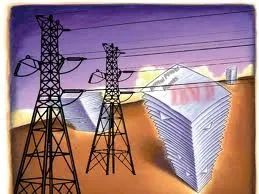
The Confederation of Indian Industry called for reforms in the power sector, particularly pointing out the need to curtail transmission and distribution losses .
Ex-IEA official tells India to go ahead with nuclear projects

India was advised to go ahead with its civil nuclear power projects to balance against the impact of high oil and gas prices.
Bhutan reiterates commitment to achieve 10,000 Mw by 2020
India and Bhutan have reiterated their commitment to achieve the target of 10,000 Mw of power generation in Bhutan by 2020.
NTPC projects in WB, Bihar, Orissa worst hit by coal shortage:CEA
State-run NTPC’s power projects in West Bengal, Bihar and Orissa are the worst-affected in the eastern region due to the ongoing coal supply crisis as actual generation at these plants is much lower than targeted. “Problem in the eastern region power plants of NTPC is mainly due to coal shortage and coal-handling problems,” a Central Electricity Authority (CEA) official said. The coal at these project sites is supplied by Eastern Coalfields Ltd, a subsidiary of state-owned Coal India. “Eastern Coalfields is supplying coal to NTPC’s eastern region plants… Coal transportation, which is through railways, is a problem, therefore, the hiccups,” the official said. As per CEA data released on October 22 this fiscal, the generation target of a combined 30,597.58 million units from these plants for the April 1-October 22 period was missed, with production of only 25,970.75 million units, a 15.12 per cent shortfall. On October 22 alone, NTPC had set a power generation target of 154.42 million units, but was only able to produce only 139.50 million units, translating into a shortfall of about 15 per cent vis-a-vis the target, according to the data. “Generation at the eastern region plants is lesser than targeted because of coal supply constraints at Kahalgaon, Farakka plants,” an NTPC official said. NTPC has four plants in the eastern region – the 2,100-Mw Farakka (West Bengal) unit, 2,340-Mw Kahalgoan (Bihar) plant, 3,000-Mw Talcher Kaniha facility and 460-MW Talcher thermal project in Orissa. “Coal India assigned the job of supplying fuel to eastern region power plants to Eastern Coalfields Ltd, thinking that it would be able to excavate more coal for NTPC plants,” the official added. The situation has arisen because the coal mines allocated for the eastern region projects — with a total capacity of seven million tonnes — are situated in ‘no-go’ areas, where the Environment Ministry has banned mining on the ground that it will adversely impact the environment. “One of the mines has been given the green signal and the second one is yet to obtain the go-ahead. The first will start mining now,” the official said. According to the company, the expansion of the Rajmahal mines that feed NTPC’s Kahalgaon and Farakka projects from 10 million tonnes to 17 million tonnes is also long overdue. “Fourteen million tonnes more coal is required,” the official said, adding that the coal requirement at Kahalgaon had gone up after the commissioning of three 500 Mw units. Rajmahal Coalfields is working to complete the expansion project before the end of the ongoing XI Five-Year Plan (2007-12).
What you need to know about geothermal energy

What is Geothermal Energy? As the world takes measures to move towards lower carbon energy production, many forms of renewable energy technology have been developed. Geothermal energy is heat (thermal energy) that is generated and stored within the core of planet Earth. It is generated from the difference in temperature between the inner core and the surface of the Earth. When compared to other formed of renewable energy production geothermal is considered one of the most promising forms of production. To harness geothermal power involves drilling up to five kilometres below the Earth’s surface and pumping water into the Earth’s core where it is naturally heated before returning to the surface where the heat energy can be used through transfer to generate electricity and/or heat. Mitigating Geothermal Development Risks Whilst the concept is simple, construction of the required infrastructure requires significant development cost both in terms of drilling works and uncertainty over the volume of water that can be efficiently pumped and what temperature increase it will achieve. This often constitutes a major barrier to investment for the sector. For a project to have good chances of success a thorough sub-ground analysis is required, which can cost up to several million dollars. Only once this analysis is completed can actual success of a project be estimated. Should the sub-ground analysis work only identify a thermal capacity which is not sufficient to allow economic operation of a geothermal power plant, all investment made in the analysis work will be lost. Historically there has been no ability to insure risks inherent wit development of geothermal power; however Marsh in Germany has now developed a service that can assess project specific risks before the commencement of any drilling works and significant capital expenditure being incurred. The team is working to expand availability of the geothermal power risk assessment so the service can be made available for all Geothermal Power plants globally.
ADB extends $36.8M loan for Pakistan wind farm

ADB is providing a $36.8m loan to increase the capacity of a wind farm in Sindh, Pakistan.
Unpredictable geological conditions burden NEEPCO's hydro project
NEEPCO's 600 MW Kameng hydro electric project is suffering from massive time and cost overruns encountered as a result of the adverse geology of the project area.
India's north eastern region grapples with 11.6% power deficit
The Working Group has sought the formulation of a separate power policy for India's North-Eastern Region, whose 7 states continue to suffer from massive power deficits.
Russian equipment for Kudankulam nuke plant found faulty
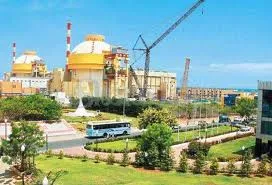
Some of the Russian supplied machineries meant for Kudankulam were found damaged even before their installation, according to a top nuclear engineer.
Thought Leadership Centre



Resource Center

 Read Here
 Advertise
 Sign Up
Event News

Early bird rates and bundled discounts are currently available.