In Focus
U.N. nuclear agency approves Japan's stress tests
U.N. nuclear agency approves Japan's stress tests
U.N. nuclear experts have endorsed stress tests designed to show that Japanese nuclear plants could withstand a repeat of last year's quake and tsunami, as the government campaigns to restart idled reactors and avoid a summer power crunch. The government, though, still faces an uphill battle to restore public trust in the nation's power utilities after the March 11 disaster wrecked the Fukushima nuclear power plant, triggering the world's worst nuclear crisis in 25 years. The Vienna-based International Atomic Agency's (IAEA) team has been in Japan at the request of the government to review stress tests conducted by its Nuclear and Industrial Safety Agency (NISA) on halted nuclear reactors to verify their safety. "We concluded that NISA's instructions to power plants and its review process for the comprehensive safety assessments are generally consistent with IAEA safety standards," James Lyons, the leader of the 10-member IAEA team, said Tuesday. "We were very impressed with the way Japan quickly implemented the emergency safety measures after the accident in March. They have also been very active in participating in the international community to determine the steps forward," Lyons added to reporters. He also pointed out areas that Japan could improve upon, such as communicating with local communities about stress tests. "NISA had done a good job in the transparency of information on their website, but we feel that it is also important for them to hold meetings in the vicinities of nuclear power plants to discuss their findings with the local population," Lyons said. Stress tests are computer simulations that evaluate a nuclear reactor's resilience to severe shocks. NISA completed a review of the stress tests earlier in January and said they showed reactors at Fukui prefecture's Ohi plant, the first to be assessed, were capable of withstanding an impact similar to the magnitude 9.0 earthquake and massive tsunami that wrecked the Fukushima plant. Some experts, however, have questioned the validity of the stress tests, charging the IAEA's visit was just for show. "It is obvious that a visit by an international organization advocating nuclear power is part of a political agenda that is built into a story already finished in advance," said University of Tokyo professor Hiromitsu Ino and former nuclear plant design engineer Masashi Goto in a joint statement last week. Ino and Goto, who serve on a committee that advises on NISA's review of the stress tests, said the tests were insufficient as they only simulate one natural disaster at a time and do not take into account the possibility of the sort of equipment failure and human error seen at Fukushima. Others suggested the IAEA's stamp of approval would not be enough to alleviate public concern. "The public mistrust toward the government's handling of information over the nuclear accident is high and I don't think the review will change that," said Atsuo Ito, a political analyst. ENERGY POLICY SHIFT In another effort to restore public confidence in nuclear power, the cabinet Tuesday approved bills that would set up a new nuclear safety agency, separating regulation of the industry from the trade and industry ministry, which has promoted nuclear power and came under criticism for its cozy ties with utilities. The Fukushima disaster has also prompted a major shift in Japan's energy policy. The resource-poor nation had aimed to increase the share of nuclear power from a third to more than half of the power supply by 2030 before the disaster, but it now looks to reduce its reliance on nuclear power and raise the role of renewable sources such as wind and solar power. But with only three of the country's 54 nuclear reactors running, and public anxiety preventing the rest from being restarted after routine checks, the government wants to avoid a an economically crippling power crunch in the summer and hopes the stress tests will help persuade a wary public that it is safe to restart some of the reactors. Local governments hosting nuclear plants, however, have said the stress tests were not sufficient to allow them to give their approval, with some requesting that findings from the Fukushima disaster be considered in drafting new safety standards as well. "A utility would not be violating any law if it went ahead and restarted a reactor after properly completing scheduled maintenance. But the Fukushima accident has heightened public concern over nuclear safety, making local consent an important part of the restart process," a trade ministry official said. Japan had promoted nuclear power as safe, cheap and clean before the Fukushima crisis. "The myth that nuclear power was absolutely safe is a theme we will explore. We need to find out how such a mindset developed," Kiyoshi Kurokawa, head of a parliamentary committee investigating causes of the Fukushima accident, told reporters Monday here
Can the Philippines finally go nuclear?
A 2,000-megawatt nuclear power plant may be online by 2025.
India won’t impose tariffs on Chinese solar products
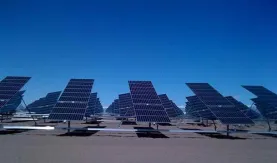
India chooses to stimulate competition, and drive down prices of solar products, to grow renewable energy.
Huge market for small wind turbines in China
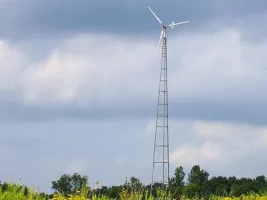
China’s potential for offshore wind power is placed at 750 GW, or three times that of onshore wind resources.
Japan's wind capacity records slowest growth in 10 years
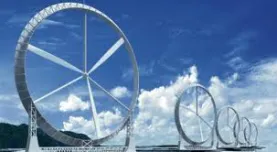
Japan's wind power capacity rose 11.7 percent in the year to March 2011as the country was set to launch a new subsidy system to lure investors to the sector.
Vietnam promotes peaceful use of nuclear power
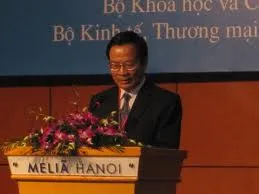
Vietnam wants peaceful and responsible use of nuclear power while ensuring power security and safety.
China may approve nuke plants again in first half
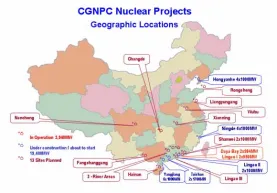
The government of China will resume approving new plants after the announcement of the nuclear safety plan cleared by the Ministry of Environmental Protection.
Pressure mounts for Indian PM to solve power woes
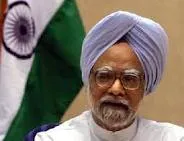
Indian PM Manmohan Singh will come under intense pressure to respond to the country's power crisis when he meets power executives.
China Power celebrates breakthroughs in wind projects
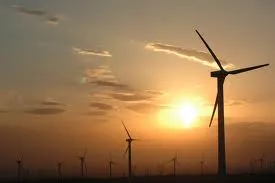
The Xianrendong Wind Farm Project located in Lufeng of Yunnan Province has been offcially approved by the Yunnan Development and Reform Commission.
Strong demand boosts Asian solar stocks
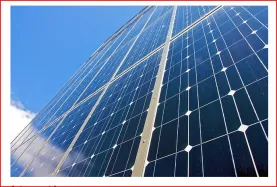
Asian solar stocks surged on a spate of good news about results and prospects worldwide.
Tepco's gas use projection on record high to offset nuke loss
Tepco bumped up its gas use plans to a fresh record high to make up for lost nuclear output after the destruction of its Fukushima Daiichi plant.
Japanese govt may take control of nuke plants from private utilities
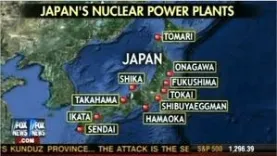
The Japanese government may take control of the nation's nuclear power plants away from private utilities, in a bid to improve accountability.
Carbon tax to spark dispute between Chinese airlines and EU

Chinese airlines may sue the EU as they refuse to impose surcharges on customers relating to the emissions tax.
Malaysia to boost renewable energy generation by more than 5 times
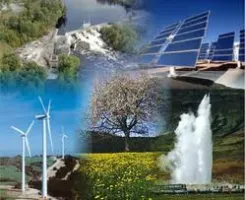
Malaysia will increase the percentage of electricity generated from renewable energy to 5.5 per cent from the less than one per cent currently.
India’s largest solar power plant goes on line
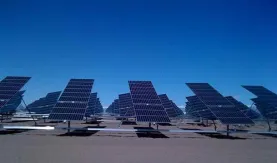
The Adani Group has commissioned what is being touted as India’s largest solar power plant after a build process that took only five months.
Japan looking at taking control of nuclear power
Japan's government is considering taking control of the nation's nuclear power plants away from private utilities, in a bid to improve accountability of the industry, the Yomiuri newspaper reported on Friday. The move comes as Tokyo Electric Power Co has fallen under criticism for its handling of the crisis at the Fukushima Daiichi nuclear plant triggered by the devastating earthquake and tsunami in March last year. "Japan should avoid a situation where private companies own nuclear power facilities and only enjoy the benefits (of low running costs) when the state takes care of compensation and decontamination arising from nuclear accidents," Trade Minister Yukio Edano, who oversees energy policy, was quoted as telling the paper. Edano also said the government must reach a clear decision on whether private companies should pay massive insurance fees and operate nuclear power facilities or hand over the benefits to the state, which also would take on the risks of nuclear accidents, according to the paper. As Tokyo Electric, better known as Tepco, faces massive compensation from the world's worst nuclear crisis in 25 years, the government has set up a bailout body for payment assistance. But with the firm's future still in doubt due to additional burdens of decommissioning the crippled reactors, the government may also inject about $13 billion into the company as early as the summer, effectively nationalising it. Edano reiterated that it was highly likely Tepco would be put under a state control but that he did not see it as a permanent move as private firms should basically be responsible for supplying electricity, the Yomiuri said. The trade ministry is set to deepen debate on nuclear power operations toward the spring and reach conclusions in step with a planned revision in the summer of the law governing nuclear damage compensation, the Yomiuri said. Through the overhaul, the government is likely to seek the public's understanding on the restart of nuclear reactors shut for regular maintenance, it added. The Nikkei business daily reported that the trade ministry was considering separating licensing system for power generation, transmission and retailing as part of power sector reform aimed at opening it up to smaller players. Last month, the government announced the agenda for power sector reform, including a possible separation of power generation and transmission operations, a long-discussed idea that would break the monopolies of regional power companies like Tepco, but stressed that any movement on the
India produces more power from bioenergy

The increasing number of bioenergy power generation projects in 2011 produced 500MW of energy.
Thought Leadership Centre


Resource Center

 Read Here
 Advertise
 Sign Up
Event News

Early bird rates and bundled discounts are currently available.